Helsinki Line Dancersin custom-made workshops
Helsinki Line Dancers organizes custom-made workshops and themed classes besides regular line dance lessons. These can be individual 1-on-1 -classes or in a group form. The leader of the workshops, Mikael Mölsä has over 25 years of experience on the topics listed below (and has been awarded for some with various awards), so there’s something for everyone in these classes.
Below is a list of available workshops. Listed under each theme is only a part of all the things that are examined at the workshops. If your interest piqued, send us a messge and ask for more!
Dance technique
During these classes we go over things such as:
– general dance technique, such as body posture
– training and information related to that
– spinning
– arm- and leg-technique
– rhythm and accenting
– styling and musical interpretations
– specific style of technique (NC2S, West Coast Swing, East Coast Swing, waltz, etc.)
Instructor training
During these classes we go over things such as:
– Preparation of a dance classe (studying, pain points, practice music, clarification of things, etc.)
– Running a dance class (timing your class, use of voice, conveying rhythm without numbers, conflict situations, best practices, etc.)
– After the dance class (diaries, after marketing, community, etc.)
This is not SRO’s TLD -course.
Choregraphy traning
During these classes we go over things such as:
- How to build a dance (brainstorming, skeleton, rhythm, etc)
– Rhythm of the dance and hooking hooks, dance-flow
– Breaking the mold. Is it worth it?
– Writing a step sheet. Why is it important to focus on it?
– Value of the video. Relevant things when filming your dance and why you should focus on that.
– Is 64 counts better than 32 counts?
– What basic mistakes to avoid (especially when your only beginning as an choreographer)
– Things that can affect the popularity of your dance (but they shouldn’t aka choreographing back then and now)
Training for a beginner dancer
During these classes we go over things such as:
– Reading a step sheet and searching for dances
– Practicing and mentality of practicing, ways of learning
– Going to your uncomfortable -zone and why it is beneficial
DJ-training
During these classes we go over things such as:
– Before your set: preparation
– Forming playlists
– Requests and playlists => Either or both?
– What separates a bad, good and excellent DJ?
– What else does a good DJ do besides play requests?
– Art of hosting
– DJ -tools – what should you use and what at least must you have?
Show training (group- ja soloshows)
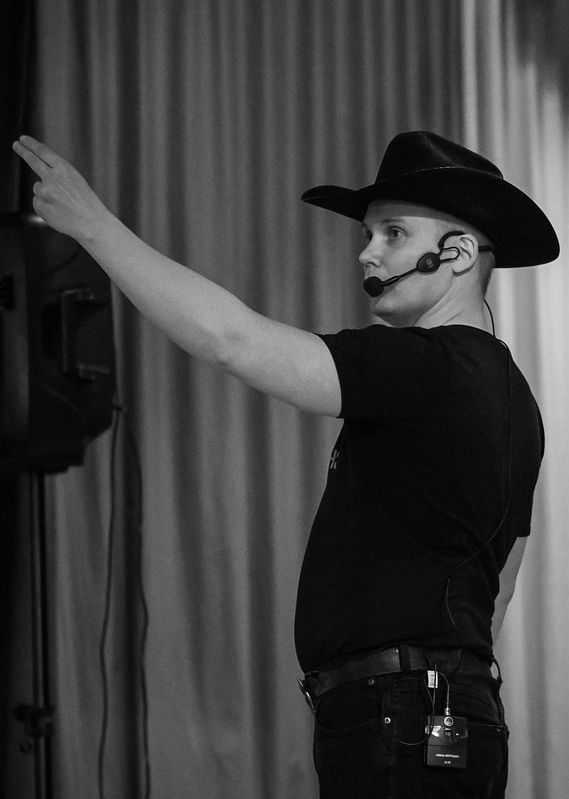
During these classes we go over things such as:
– Pre-requisites for a show – do they matter?
– How to build a show (length and style of songs, importance of the event you are performing in, etc.)
– Highlights and their use
– Importance of storytelling
– Importance of practice (commitment and quality)
– Are there songs you should not use?
– Using of the camera: blessing and a curse
– Clothing
– Importance of floor trial and dress rehearsal
– What additional things to consider when creating a group show?
Event organizing -traninig:
During these classes we go over things such as:
– How to build a working line dance event (pre-event evaluations, plans, execution, post-event evaluation)
– Assigning roles and leading
– Agile or waterfall project model?
– Who calls the shots? The customer or the organizer?
– The importance of communication and branding
– Advertisement: Is social media marketing enough? How much do you ACTUALLY need to advertise?
– Importance of volunteers
– Importance of guest stars
– Post-event advertisement – what does it contain?
– What to watch out for when organizing (people and things)
Classes also contain discussion on topics and posssibly personal opinions with reasoning behind them. These are explicitly expressed.
What IS line dance?
Line dance is a form of dance that originated from the european ballroom dances from where it moved over to the United States where it evolved to the better-known form of dancing to Country music. To Finland line dance arrived at 1993, when at the lead of Mika Nurminen it started to spread around the country. At the turn of the millenium line dance had it’s next major change when other types of music such as latin music and irish music started gaining traction amongst the line dance community. Soon other forms of music, such as ballroom and hiphop assimilated themselves to the line dance scene.
Nowdays line dance is a melting pot of all kinds of dancing and on the floor you come across moves and patterns from other styles of dancing, such as moonwalks, batucadas, curved feathers, running mans and other patterns and moves. Musically line dance encompasses all kind of music and songs that have some sort of a logical structure of beat. A careful estimation puts the amount of line dances in the world over 200.000. The biggest website in the world, Copperknob is a home to about 165.000 stepsheets.
Here is an example of a beginner -level line dance (link opens to YouTube).
Here is an example of an improver -level line dance (link opens to YouTube).
Here is an example of an intermediate -level line dance (link opens to YouTube).
Here is an example of an advanced -level line dance (link opens to YouTube).